Refrigerants play a crucial role in the operation and efficiency of air conditioning systems. These substances are responsible for absorbing heat from indoor environments and releasing it outside, enabling the cooling process that maintains comfortable temperatures in homes, offices, and various commercial spaces. The effectiveness of an air conditioner largely depends on the properties of the refrigerant used, making its selection and management vital for optimal performance.
At the core of an air conditioning system is a closed-loop cycle where the refrigerant continuously changes states between liquid and gas. When inside the evaporator coil, the refrigerant absorbs heat from indoor air as it evaporates into a gas. This phase change allows it to capture large amounts of thermal energy efficiently. The gaseous refrigerant then travels to the compressor, where it is pressurized and heated further before moving to the condenser coil located outside or in another designated area. In this part of the cycle, heat absorbed indoors is released into the outdoor environment as the refrigerant condenses back into a liquid form. This continuous transformation enables consistent cooling without needing additional energy input beyond powering components like compressors and fans.
The choice of refrigerant impacts not only how effectively an air conditioner cools visit our resource center but also its environmental footprint. Traditional refrigerants such as chlorofluorocarbons (CFCs) were phased out due to their ozone-depleting effects, replaced by hydrochlorofluorocarbons (HCFCs) which still posed environmental challenges despite being less harmful. Modern systems now commonly use hydrofluorocarbons (HFCs), which do not deplete ozone but can have high global warming potential if leaked into the atmosphere. Consequently, research continues toward developing alternative refrigerants with lower environmental impact while maintaining or improving energy efficiency.
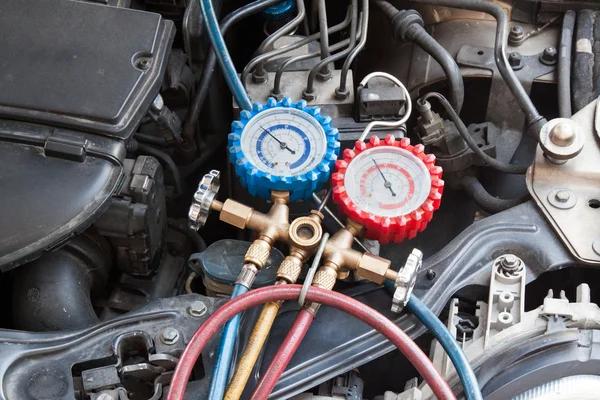
Proper maintenance ensures that refrigerants function correctly within air conditioning units over time. Leaks reduce system pressure and cooling capacity while increasing electricity consumption because compressors work harder to compensate for lost coolant volume. Regular inspections help detect leaks early so technicians can repair them promptly and recharge systems with appropriate amounts of refrigerant according to manufacturer specifications.
In summary, refrigerants are fundamental agents driving efficient air conditioning by facilitating heat transfer through state changes within a sealed system. Their chemical properties determine both operational performance and ecological consequences associated with usage or leakage incidents. Advances in environmentally friendly formulations combined with diligent upkeep contribute significantly toward maximizing comfort indoors while minimizing negative impacts on natural resources and climate stability worldwide.